How One School District Saved $70M And Took Control Of Its Energy Future
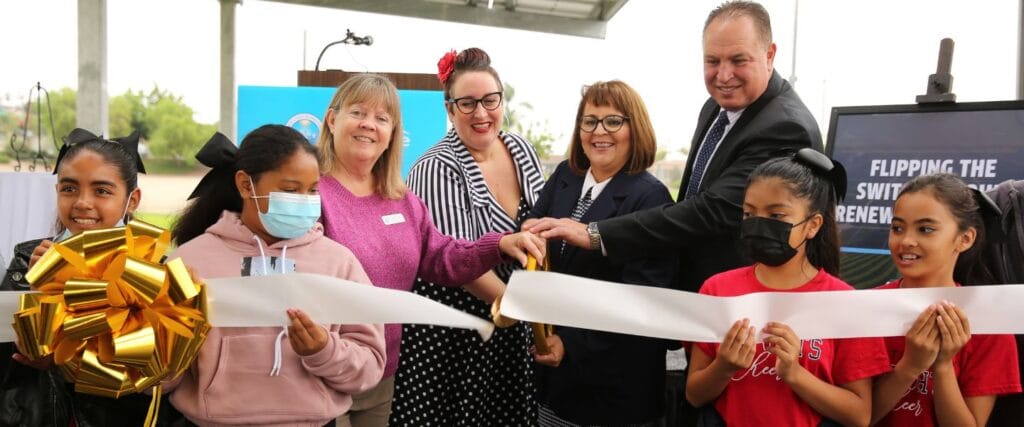
Introduction: Solar Energy for Schools –
A Smart Investment
This school solar project in California is proving just how transformative clean energy can be for education budgets and communities. Across the U.S., school districts are embracing solar energy as a long-term solution to rising operational costs and sustainability goals. A shining example of this shift is the Chula Vista Elementary School District in California. This forward-thinking district is setting the bar high with an ambitious solar energy initiative that combines energy efficiency, cost savings, and environmental stewardship.
Related reading: Busting 5 Big Myths About Solar + Storage
Project Overview
8.1 MW Across 48 Sites
The Chula Vista Elementary School District has executed a groundbreaking solar and microgrid project, installing 18,050 solar panels across 48 school sites. These panels were primarily installed as carport shade structures at 46 campuses and rooftop systems at district buildings. Altogether, the system delivers a total capacity of 8.1 megawatts (MW), significantly contributing to the district’s energy independence.
“We’re Meeting 90% of Our Energy Needs”
According to Deputy Superintendent Oscar Esquivel, the project is expected to meet up to 90% of the district’s total energy demand. “By the end of this project, we think we will be able to generate about 90 percent of the District’s overall energy demands. That is a tremendous amount of energy and savings for our District,” he said.
Financial Benefits
$70 Million in Projected Energy Savings
This initiative is forecasted to save the school district more than $70 million in electricity costs over the next 25 years. These savings will directly benefit students by freeing up budget allocations for educational programming, infrastructure updates, and community services.
Energy Resilience
Microgrids Provide Power Stability and Backup
A vital feature of the project is the inclusion of a microgrid solar battery storage system. This system not only supports energy needs during peak hours (between 4:00 p.m. and 9:00 p.m.) when utility rates are highest, but also provides backup power to critical facilities such as the IT department, additional servers, and the Child Nutrition freezer.
Explore this topic further: Understanding PV Modules: The Heart of Solar Energy
Emergency Readiness and Blackout Protection
This functionality ensures that the school district maintains essential operations during power outages or emergencies, particularly important in California, where wildfire-related blackouts are increasingly common.
Environmental Impact
Modeling Sustainability for Future Generations
In addition to economic savings, the Chula Vista project underscores a strong environmental commitment. The clean energy generated will offset thousands of tons of CO2 annually, aligning with California’s climate goals. According to Deputy Superintendent Esquivel, “This is a ‘green’ project both environmentally and fiscally.”
Promoting Awareness Through Education
The district aims to model responsible energy use and sustainability for its students and community. “We want to model for our students the importance of energy awareness, conservation, and sustainability,” Esquivel added.
Why School Solar Projects Matter
According to the “Brighter Future Report” by Generation180, SEIA, and The Solar Foundation, energy costs are the second largest expense for U.S. public schools. Reducing expenses through solar allows schools to reallocate millions of dollars toward educational goals.
Also read: Top 5 Expert Tactics to Delay-Proof Your Solar Projects
Project Financing
Funded with General Obligation (G.O.) Bonds
The Chula Vista project was funded using a $32 million General Obligation (G.O.) Bond—a type of municipal bond supported by the full faith and credit of the issuing government. These bonds offer several advantages:
- Community-Backed Funding: G.O. Bonds typically require voter approval, ensuring local support and accountability.
- Low-Risk Investment: Backed by tax revenues (like property or sales tax), they are considered stable and secure.
- Public Project Alignment: Funds from these bonds are used for infrastructure and improvement projects, like solar installations.
Why G.O. Bonds Work for Schools
For school districts, GO Bonds offer an effective method for managing large capital investments. Over time, the financial savings from solar can far outweigh the upfront costs, ultimately resulting in net-positive cash flow.
Learn more about G.O. Bonds here: https://www.investopedia.com/terms/g/generalobligationbond.asp
Education and Community Engagement
Real-Time Learning Opportunities
The solar infrastructure serves more than just energy goals—it’s a platform for student engagement and STEM education. Teachers now have access to real-time data from the panels, enabling integration into science and environmental studies curricula.
Building Pride and Participation
It’s not just an energy project—it’s a learning opportunity and a point of pride for the community.
How to Start Your Own School Solar Project
Key Steps for Districts
- Conduct a feasibility study to evaluate site potential
- Work with energy consultants or ESCOs (Energy Service Companies)
- Explore financing options like G.O. Bonds or Power Purchase Agreements
- Engage stakeholders—parents, faculty, students, and taxpayers
- Create an educational component to integrate with the curriculum
Use Case Toolkits
Use resources like the Brighter Future Report and consult local energy planning guides to assess incentives, timelines, and expected ROI.
Conclusion
A Blueprint for Schools Nationwide
The Chula Vista Elementary School District’s success story is a compelling case for how educational institutions can benefit from renewable energy. By combining thoughtful financing, advanced technology, and community vision, Chula Vista is reaping environmental and financial rewards that will resonate for decades.
Next Steps for School Leaders
Interested in learning how solar can benefit your school or institution?
Contact a qualified solar consultant today for a free consultation.
FAQs
How much will Chula Vista save from their solar project?
The school district is expected to save over $70 million in utility costs across 25 years.
How many solar panels were installed?
A total of 18,050 panels were installed across 48 sites.
What is the significance of the microgrid system?
It ensures energy is available during peak times and provides backup during emergencies, reducing vulnerability to blackouts.
How was the project financed?
Through a $32 million General Obligation (G.O.) Bond, which was approved by voters and paid back through tax revenue.
Can other school districts replicate this model?
Absolutely. With the right planning and support, school districts across the country can implement similar solar and microgrid projects to save money and promote sustainability.