Why Solar Projects Get Delayed: 10 Common Causes and How to Avoid Them
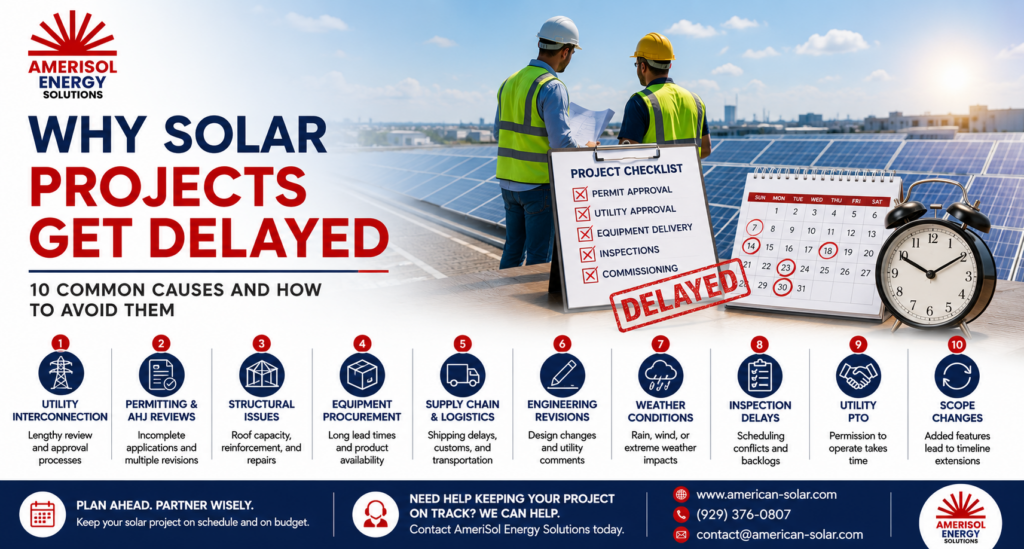
Commercial solar projects offer significant long-term savings and sustainability benefits, but they rarely move from concept to commissioning without challenges. Even well-funded projects with experienced teams can experience unexpected delays that affect budgets, construction schedules, and return on investment.
While some delays are unavoidable, many can be minimized through proper planning, early coordination, and working with experienced engineering, procurement, and installation partners.
Whether you’re a property owner, EPC contractor, developer, or facility manager, understanding the most common causes of project delays can help you keep your solar investment on track.
Typical Timeline for a Commercial Solar Project
Every project is unique, but a typical commercial installation follows these phases:
- Site assessment
- Preliminary design
- Engineering
- Equipment procurement
- Utility interconnection application
- Permitting
- Structural review
- Equipment delivery
- Installation
- Inspection
- Utility approval
- Commissioning
Delays can occur during any of these stages.
1. Utility Interconnection Approval
For many commercial projects, the longest delay comes before construction even begins.
Utilities must review:
- System size
- Electrical design
- Protection settings
- Transformer capacity
- Grid impact
- Existing infrastructure
If upgrades are required, approval timelines can extend by several months.
How to reduce delays
- Submit complete interconnection applications.
- Coordinate with the utility early.
- Use experienced electrical engineers familiar with local utility requirements.
2. Permitting and AHJ Reviews
Every jurisdiction has different permitting requirements.
Local Authorities Having Jurisdiction (AHJs) review:
- Electrical drawings
- Structural calculations
- Fire code compliance
- National Electrical Code (NEC) compliance
- Zoning requirements
Incomplete permit packages often result in multiple review cycles.
Best practice
Prepare detailed engineering documents before submission to minimize revisions.
3. Structural Issues
Many commercial rooftops require structural evaluations before solar equipment can be installed.
Common findings include:
- Insufficient roof capacity
- Roof deterioration
- Water intrusion
- Required reinforcement
- Roofing warranty concerns
Unexpected structural upgrades can significantly affect project schedules.
4. Equipment Procurement and Lead Times
One of the most overlooked causes of delays is equipment availability.
Although manufacturing capacity has grown significantly in recent years, demand for certain products can still outpace supply.
Potential bottlenecks include:
- Solar modules
- Commercial string inverters
- Battery Energy Storage Systems (BESS)
- Transformers
- Switchgear
- Rapid shutdown equipment
- Electrical panels
- Mounting hardware
Lead times can fluctuate based on market demand, shipping conditions, and manufacturing schedules.
How to reduce procurement delays
- Finalize equipment selections early.
- Work with distributors that maintain strong supplier relationships.
- Confirm product availability before construction begins.
- Order long-lead items as soon as engineering is complete.
5. Supply Chain and Logistics
Even when equipment is available, transportation can introduce delays.
Examples include:
- Port congestion
- Customs inspections
- Trucking shortages
- Weather events
- Delivery scheduling conflicts
- International shipping disruptions
Large commercial projects often require multiple coordinated deliveries.
6. Engineering Revisions
As projects evolve, design changes are common.
Examples include:
- Roof layout adjustments
- Equipment substitutions
- Utility comments
- Structural modifications
- Electrical redesign
- Customer-requested changes
Each revision may require updates to engineering drawings and permit submissions, extending the overall timeline.
7. Weather Conditions
Construction schedules are heavily influenced by weather.
Severe conditions may include:
- Heavy rain
- Snow
- High winds
- Extreme heat
- Lightning
- Hurricanes
Safety always takes priority, and installation crews may need to suspend work until conditions improve.
8. Inspection Delays
Before a system can operate, inspections typically include:
- Electrical inspection
- Building inspection
- Fire inspection (where applicable)
- Utility witness testing
Inspection scheduling varies by municipality and utility, particularly during peak construction seasons.
9. Utility Permission to Operate (PTO)
Many customers assume the project is complete once installation is finished.
In reality, the system often cannot be energized until the utility grants Permission to Operate (PTO).
Depending on the utility, PTO approval may take anywhere from a few days to several weeks after the final inspection.
10. Changes in Project Scope
Scope changes are one of the most common reasons schedules slip.
Examples include:
- Adding battery storage
- Increasing system size
- Adding EV charging
- Roof replacement
- Electrical service upgrades
- New backup power requirements
Although these upgrades can improve project value, they often require additional engineering, permitting, and procurement.
Common Mistakes That Lead to Delays
Many delays can be traced back to avoidable planning mistakes, such as:
- Waiting too long to order equipment.
- Selecting products before confirming availability.
- Beginning construction before permits are approved.
- Delaying structural assessments.
- Submitting incomplete utility applications.
- Frequently changing the system design.
- Choosing suppliers based solely on the lowest price without considering support and lead times.
Tips for Keeping Your Solar Project on Schedule
Successful projects typically follow these best practices:
- Begin engineering early.
- Confirm equipment availability before finalizing the design.
- Engage with the utility company as soon as possible.
- Perform structural evaluations before permitting.
- Maintain clear communication among owners, EPCs, engineers, suppliers, and utilities.
- Build reasonable contingency time into the project schedule.
- Partner with experienced suppliers that can help identify alternative products if lead times change.
How AmeriSol Energy Solutions Can Help
Procurement plays a major role in keeping commercial solar projects on schedule. At AmeriSol Energy Solutions, we work with developers, EPC contractors, and commercial property owners to help reduce equipment-related delays by providing:
- Solar modules
- Commercial inverters
- Battery Energy Storage Systems (BESS)
- EV charging infrastructure
- Racking systems
- Rapid shutdown devices
- Balance-of-system (BOS) components
- Equipment sourcing and logistics support
- Alternative product recommendations when lead times change
By coordinating equipment procurement early in the project lifecycle, we help customers minimize delays and maintain construction schedules.
Need pricing, availability, or help sourcing equipment for your next commercial solar project? Contact AmeriSol Energy Solutions for a free consultation or submit a request through our website.
https://american-solar.com/free-consultations/
Frequently Asked Questions
What is the biggest cause of solar project delays?
Utility interconnection reviews, permitting, and equipment procurement are among the most common causes of delays in commercial solar projects.
How long does a commercial solar project typically take?
Most commercial projects take 4 to 12 months from initial planning to commissioning, depending on system size, permitting requirements, utility approval timelines, and equipment availability.
Can equipment shortages still delay projects?
Yes. While manufacturing capacity has expanded, certain products—such as transformers, switchgear, specialized electrical equipment, and some battery systems—may still have extended lead times depending on market conditions.
Can delays be prevented?
Not all delays are avoidable, but early planning, complete engineering packages, proactive utility coordination, and experienced procurement partners can significantly reduce project risks.
Final Thoughts
Solar projects involve far more than installing panels on a roof. Successful commercial installations require careful coordination between property owners, engineers, utilities, permitting agencies, equipment suppliers, and installers. Delays can occur at any stage, but understanding the most common challenges—and planning for them early—can help keep projects moving efficiently.
Choosing experienced partners for engineering and procurement not only reduces the likelihood of costly setbacks but also helps ensure your system is delivered on time and performs as expected for decades to come.
References
- U.S. Department of Energy – Solar Energy Technologies Office
- National Renewable Energy Laboratory (NREL) – Commercial Solar Research
- Solar Energy Industries Association (SEIA) – Commercial Solar Resources
- National Electrical Code (NFPA 70)
- Federal Energy Regulatory Commission (FERC) – Interconnection Resources